Fewer No-Shows, Less Schedule Chaos: Cancellation and Make-Up Policies for Tutoring Businesses


Fewer No-Shows, Less Schedule Chaos: Cancellation and Make-Up Policies for Tutoring Businesses
A tutoring business can have excellent instructors and still lose money and goodwill through scheduling confusion. The familiar pattern is a family cancels late, a tutor has reserved the hour, an administrator promises a make-up session, and nobody agrees on whether the lesson should be billed. The real problem is not a single cancellation. It is the absence of a clear, consistently applied **tutoring cancellation policy**.
A useful policy does three things at once: protects tutor time, treats families fairly, and keeps the student's learning plan intact. It should be written in language a parent can understand before booking—not discovered after a dispute. The exact notice period, fee, and credit rules are business decisions subject to local law and contractual obligations; the framework below is a practical operating model, not legal advice.
Separate the events that businesses often confuse
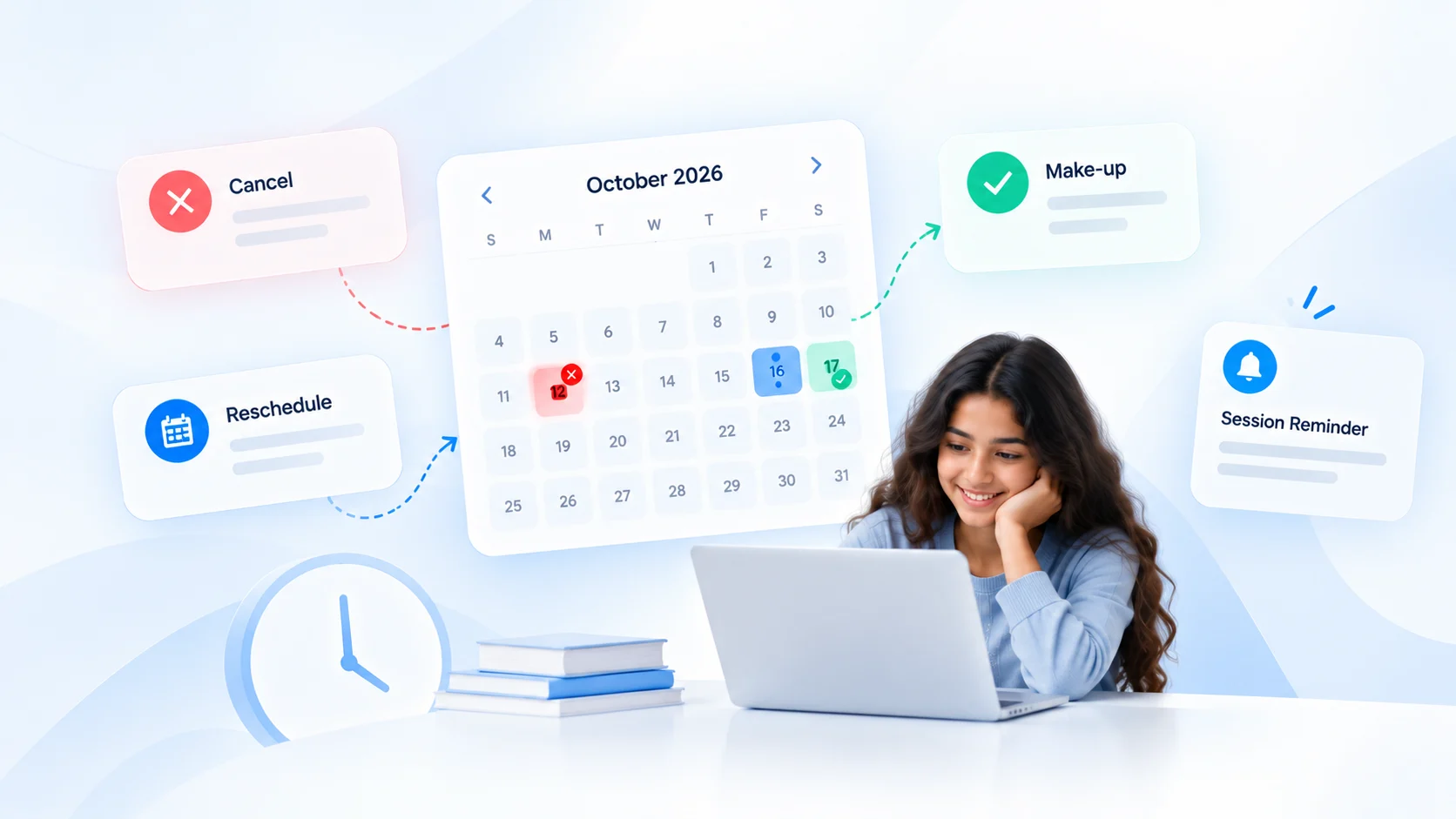
A cancellation is advance notice that a scheduled lesson will not happen. A no-show is a failure to attend without sufficient notice. A reschedule changes the agreed time before the session begins. A make-up session replaces missed instruction. A credit changes the financial balance. These are not interchangeable. When a CRM or calendar uses one generic “canceled” status, the billing and instructional consequences become hard to reconstruct.
Event | Operational record | Policy decision |
|---|---|---|
Family cancels with adequate notice | Canceled by family; notice timestamp | Reschedule, credit, or no charge under published terms |
Family cancels late | Late cancellation; notice timestamp | Whether a fee or forfeited session applies |
Student does not attend | No-show; tutor attendance recorded | Grace period, contact attempts, and billing treatment |
Tutor cancels | Canceled by tutor; reason and owner | Replacement, make-up, or refund obligation |
Technical disruption | Incident type and duration | Fair remedy under platform/service policy |
Make-up completed | New linked session | Close the original exception without double billing |
The distinction between a credit and a make-up matters. A business can offer a make-up without changing the invoice, or a credit without promising a specific replacement time. Document which approach applies so the administrator is not improvising a different rule for each family.
Write a policy with six explicit answers
First, define how much advance notice counts as on time and which communication channels are valid. Second, state what happens when the family cancels late. Third, explain how long a tutor waits for a no-show and what attempts are made to contact the student. Fourth, state what happens when the tutor cancels. Fifth, describe whether and when a make-up can be booked. Sixth, explain how exceptions, credits, and disputes are reviewed.
Avoid a policy that simply says “24-hour cancellation policy” without defining what happens after the deadline. Does the session count as used? Can it be made up? Does an emergency qualify for an exception? Is the rule different for recurring packages? Clear answers reduce friction because families can predict the outcome.
Design reminders as an operational safeguard
An automated confirmation at booking and a reminder before the session can reduce accidental misses, especially when schedules change frequently. However, do not claim that a particular reminder sequence has been proven to reduce tutoring no-shows. A 2013 Cochrane review of mobile reminders for healthcare appointments found improved attendance versus no reminders across several trials; those were healthcare settings, not tutoring businesses. The transferable idea is to test a low-friction reminder workflow and measure your own results.
A practical reminder sequence is a confirmation when the session is booked, a short reminder the day before, and a same-day reminder when the appointment is especially easy to forget. Each should include the correct local time zone, location or meeting link, and the approved cancellation route. Avoid excessive messages that train families to ignore the system.
Build the make-up policy around real capacity
A make-up promise is only valuable when a suitable tutor and time are actually available. If every family can move a missed lesson indefinitely, the business accumulates an invisible scheduling liability. Set a reasonable expiry period for make-up eligibility, clarify whether a substitute tutor is acceptable, and specify whether a make-up can be moved again. Publish these terms before the first lesson.
The company should also protect its tutors. A late cancellation can leave an instructor with an unpaid gap that cannot realistically be filled. If a business wants to waive a family fee as a goodwill exception, decide internally who bears the cost rather than automatically transferring it to the tutor. Fairness has to work on both sides of the relationship.
Use one exception workflow, not private deals
Every business needs room for genuine emergencies. The problem begins when exceptions are negotiated in personal text threads and never recorded. Create an exception log with the original session, request reason, policy category, approver, financial treatment, make-up date if any, and final resolution. Limit access to sensitive explanations; the business usually needs the decision, not detailed private medical or family information.
Exception | Suggested decision path | Required record |
|---|---|---|
Serious illness or family emergency | Manager reviews a documented waiver | Decision and date; avoid unnecessary sensitive details |
Tutor unavailable | Offer replacement or refund/credit per agreement | Tutor-side cancellation and remedy |
Platform outage | Confirm incident and alternative channel | Duration, impact, resolution |
Recurring late cancellations | Review schedule fit with family | Pattern, proposed new time, agreed plan |
Disputed notice time | Check timestamped communication | Source record and decision owner |
Align attendance records with billing
Billing disputes are easier to prevent than to resolve. Each invoice or package ledger should show which sessions were delivered, which were canceled within policy, which credits were granted, and which make-ups remain open. A calendar with session history and attendance analytics can supply the scheduling evidence; the invoicing workflow should reflect the business's actual financial decision. Do not assume that every cancellation status automatically triggers the correct charge—verify the product behavior and your policy.
For prepaid packages, define whether a late cancellation consumes a session credit. For pay-as-you-go billing, define whether a cancellation fee appears as a separate line or as the original lesson charge. Check applicable consumer rules, tax treatment, and contract language with qualified advisers when necessary.
Measure the causes, not just the cancellation count
A simple monthly dashboard should show completed sessions, family cancellations with adequate notice, late cancellations, no-shows, tutor cancellations, make-ups completed, and unresolved credits. Calculate rates using a consistent denominator such as scheduled sessions. Break the results down by time block, day, program, and lead time before the appointment. A spike in Monday evening misses may signal a bad time slot rather than a need for harsher penalties.
Review revenue lost or protected by policy, but also watch student dosage. A policy that collects fees while a student repeatedly misses instruction may protect short-term revenue and undermine the educational outcome. The best response may be a different schedule, shorter sessions, or a pause until the family can participate consistently.
Train staff to explain the policy without confrontation
When a family misses a session, lead with the facts: scheduled time, recorded notice, policy provision, and available next steps. Do not accuse or shame. Give administrators a short decision tree for common cases and a clear escalation path for unusual ones. Tutors should not be pressured to negotiate exceptions during teaching time.
Make the policy easy to find in the enrollment agreement, confirmation email, and booking flow. A parent should be able to read it in under two minutes. If a rule routinely requires lengthy explanation, the wording or underlying rule may need revision.
A four-week implementation plan
During week one, audit the last month of cancellations and list where staff made inconsistent decisions. In week two, write the policy and have it reviewed for legal and contractual fit. In week three, update booking confirmations, reminders, calendar statuses, and billing procedures. In week four, train tutors and administrators, then review the first exceptions. Do not retroactively impose new fees on sessions booked under older terms without appropriate agreement.
Frequently asked questions
Should tutoring businesses charge for late cancellations?
They may choose to, but the amount and conditions should be fair, clearly disclosed, consistently applied, and lawful where the business operates. Consider tutor compensation and the family's ability to understand the terms.
Should every no-show receive a make-up?
Not necessarily. Make-up eligibility should follow the written policy and available capacity. A separate exception process can address unusual circumstances without making the policy meaningless.
How long should tutors wait for a late student?
Choose a documented grace period and contact procedure that fits your service. Record actual attendance and use the same standard across comparable sessions.
A good cancellation policy is not a penalty system disguised as customer service. It is a predictable agreement about time, learning, and money. When attendance records, reminders, make-ups, and billing tell the same story, everyone spends less time arguing about the calendar and more time teaching.
Other Stories