AI in Tutoring Without Losing the Learning: A Practical Human-in-the-Loop Policy


AI in Tutoring Without Losing the Learning: A Practical Human-in-the-Loop Policy
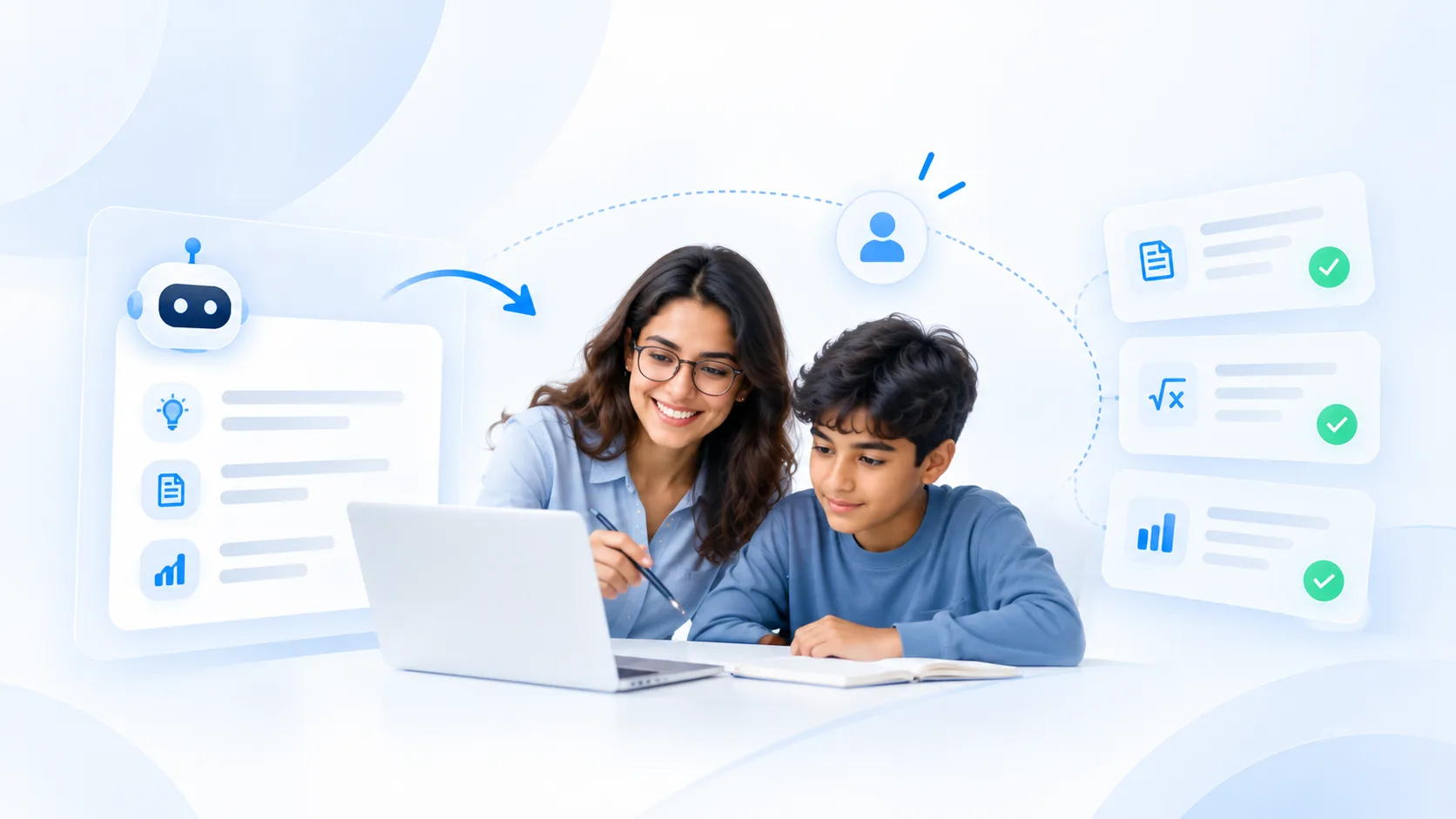
Tutoring companies do not need a policy that says “AI: yes” or “AI: no.” They need rules that distinguish productive assistance from outsourcing the learning. The central principle is simple: a human tutor remains responsible for instructional judgment, student relationships, verification, and the decision about when a learner should struggle productively rather than receive an instant answer.
The OECD Digital Education Outlook 2026 warns that better task performance with general-purpose generative AI does not automatically produce learning gains, especially when cognitive work is simply offloaded. Read the OECD 2026 outlook.
Define the boundary: AI may assist; the tutor remains accountable
A human-in-the-loop policy should state who owns the final instructional decision. AI can help generate examples, organize notes, draft practice, summarize patterns, or suggest explanations. The tutor decides whether those outputs are accurate, appropriate for the student, aligned with the curriculum, and useful at that moment.
Stanford’s SCALE Initiative distinguishes human-led tutoring with AI support from fully automated AI tutoring and emphasizes that the research base remains strongest for human-led high-impact tutoring. See Stanford SCALE’s 2026 brief.
Use AI where it expands human capacity
Use case | Generally appropriate with oversight | Human responsibility |
Lesson preparation | Generate examples or alternative explanations | Verify accuracy and fit |
Assignment creation | Draft item variants or practice sets | Check originality, difficulty, answer key |
Session notes | Summarize tutor-authored notes | Correct before saving/sending |
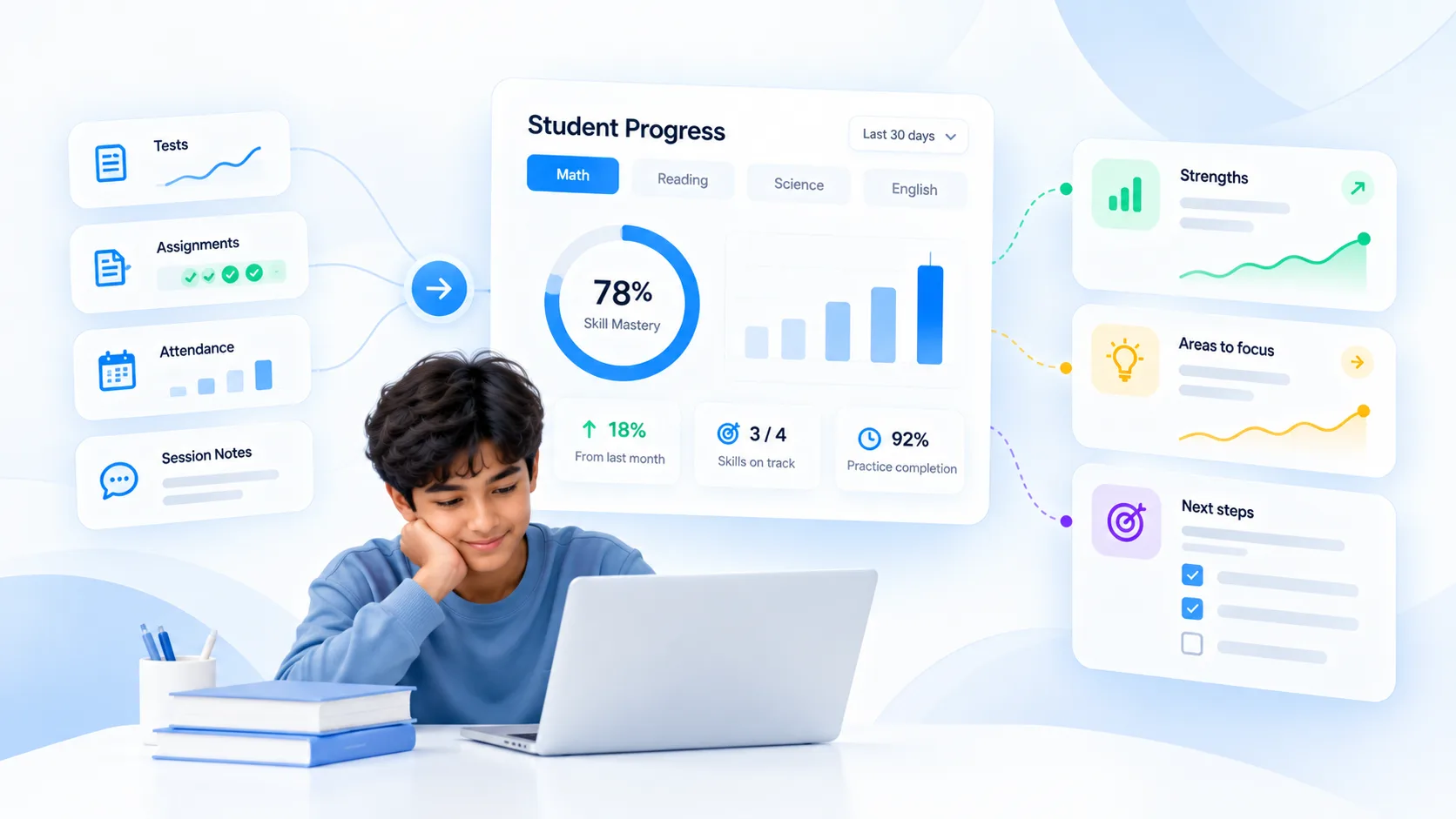
Performance analysis | Surface patterns across results | Interpret causes and choose instruction |
Student-facing hints | Provide scaffolded prompts | Set boundaries and monitor dependence |
Parent communication | Draft routine summaries | Ensure context, tone, and claims are accurate |
Protect productive struggle
The easiest AI experience is not always the best learning experience. If a student can ask for the complete solution before attempting retrieval, planning, or error correction, the tool may remove exactly the cognitive work the tutor intended to train. Policies should therefore specify when AI help is allowed: after an attempt, after a hint request, for feedback on reasoning, or for generating a new analogous problem rather than solving the assigned one.
Create a verification rule
AI-generated educational content can be fluent and wrong. Every student-facing answer key, explanation, practice question, factual claim, or recommendation should have a named human reviewer when it affects instruction. For high-stakes test prep, verify against current official specifications rather than trusting a model’s memory of a prior test format.
Treat student data as a separate decision
CoSN’s 2026 State of EdTech report found substantial concern among education technology leaders about AI-enabled cyberattacks and student data privacy, even as optimism about AI productivity and tutoring increased. Review the CoSN report.
A tutoring business should decide what information may enter an AI tool before staff begin experimenting. Avoid unnecessary personally identifiable information. Review vendor terms, retention practices, training-data policies, age restrictions, and contractual controls. When a task can be completed with de-identified information, use the minimum data required.
Minimum policy questions
Which AI tools are approved for staff use?
What student information is prohibited from prompts?
Which outputs require human verification?
When must students or families be told AI was used?
Can AI interact directly with students, and under what supervision?
How are incidents, incorrect outputs, or privacy concerns escalated?
Separate tutor-facing AI from student-facing AI
Tutor-facing assistance is usually easier to control because a professional reviews the output before it reaches the learner. Direct-to-student systems require stronger guardrails: age appropriateness, monitoring, privacy, content safety, escalation, and limits on answer-giving. Do not treat those two deployment models as the same risk.
Review the policy using evidence, not enthusiasm
AI capabilities and evidence are changing quickly. Schedule a policy review at least quarterly and whenever a major tool or workflow changes. Track where AI actually saves tutor time, where corrections are frequent, whether students are becoming dependent on hints, and whether staff understand the privacy rules.
Create an approved-use matrix for staff
A policy becomes usable when staff can quickly tell what is allowed. Build a one-page matrix with three categories: approved without special permission, approved only with human review or de-identification, and prohibited. For example, brainstorming lesson examples may be approved; uploading a student report may require de-identification and an approved enterprise tool; entering sensitive student records into a public chatbot may be prohibited.
This matrix should name the approved tools rather than asking tutors to interpret broad language such as “use secure AI.” Product terms change, so the organization should maintain a current list and assign one person to review changes in privacy terms, age requirements, and data controls.
Require disclosure where AI meaningfully shapes the work
Not every spelling correction needs an AI disclosure, but families and students should not be misled about who produced substantive educational work. If AI materially generated a study plan, practice set, feedback report, or student-facing explanation, define when disclosure is appropriate. The purpose is trust and accountability, not adding a disclaimer to every routine task.
Tutors should also be able to explain what they did with the AI output: what was generated, what was checked, what was changed, and why the final version is appropriate for the learner. That standard discourages blind copy-paste behavior.
Train tutors to recognize AI failure modes
Verification is a skill. Staff should practice spotting fabricated facts, incorrect calculations, outdated test specifications, answer-key inconsistencies, biased assumptions, overconfident language, and explanations that sound plausible but skip essential reasoning. Training should include examples from the company’s actual subjects and workflows.
For generated practice material, require a second-pass check of the prompt, question, answer, explanation, and difficulty. For standardized tests, compare structural claims with current official sources. For parent-facing analytics, distinguish measured data from AI-generated interpretation so the report does not present speculation as fact.
Measure whether AI is actually helping
An AI initiative should have operational metrics. Track preparation time, correction rate, tutor adoption, student engagement, privacy incidents, and whether AI-supported materials require more or less manager review. If a tool saves five minutes but introduces frequent factual errors, the apparent productivity gain may disappear in quality control.
Also monitor instructional signals. Are students asking for hints sooner? Are they producing less independent reasoning? Are tutors relying on generated explanations instead of diagnosing misconceptions themselves? Human-in-the-loop governance means measuring the effect on learning behavior, not only the effect on staff speed.
Have an incident and rollback process
Even approved tools can fail. Staff need a simple way to report an incorrect or unsafe output, accidental data exposure, inappropriate student interaction, or vendor change. Define who investigates, when use should be paused, how affected data or families are handled, and how the policy is updated. A rollback process makes experimentation safer because the organization knows how to stop when evidence changes.
A 30-day implementation checklist
During week one, inventory the AI tools staff are already using and classify each use case as tutor-facing or student-facing. In week two, publish the approved-use matrix and the minimum student-data rules. In week three, train staff on verification using examples from real tutoring subjects and workflows. In week four, review actual usage, correction rates, time saved, and any privacy or quality incidents. Remove tools or use cases that create more review work than value. Add new permissions only when the organization can explain who is accountable for the output. This keeps the policy practical: staff know what they may do today, managers can see where risk is concentrated, and the company can adapt as evidence and vendor capabilities change.
Bottom line
The goal is not to keep AI out of tutoring. It is to put AI in the right place. Let it reduce repetitive work, support preparation, and surface useful patterns while humans retain instructional judgment, verification, relationships, and responsibility for student data. A good policy protects the thinking that students still need to do themselves.
Other Stories